
A Flower That Bloomed: QUADECA
WRITTEN BY JACKSON MACKASEY
“BEEN AFRAID OF NOTHING FOR SO LONG/THAT’S WHY I’M STUCK WITH IT/BUT NOTHING IS GONNA CHANGE UNTIL I CHANGE WHAT NOTHING IS”
The year is 2018, and YouTube was in a very strange phase. There were dozens of creators releasing diss tracks for clicks, money, and laughs. It was a fun time for kids like me, constant beef to follow, you would be lying if you said it wasn’t entertaining.
There was one kid from Los Angeles, however, who realized that he was having a little too much fun writing music, and that maybe there was a career there for him. That young kid was Benjamin Fernando Barajas Lasky, better known as Quadeca, who got his start, out of all things, from a KSI diss track.
Quadeca’s music over the last 10 years has flipped fully on its head. Before the music, FIFA content, pack openings and gameplay were what gave him an established fan base early on. It wasn’t until September 15, 2015, when he dropped his first mixtape “Work In Progress”, which has since been moved off of his main streaming profiles and to a second profile titled “Quadeca Archives”, which now plays home to all of his early work due to creative differences between him and himself 10 years ago. This tape doesn’t have the Quadeca sound in even the slightest bit, but it has something, a passion for music. He hit the ground running with 4 mixtapes in 3 years, you can hear him improving with each track, as his sound would slowly start to blend experimental, unconventional indie electronic and rap-rock influences.
Quadeca released a diss track on KSI after the other YouTube gamer talked negatively about Quadeca's rapping ability. This led Lasky to release “Insecure”, a moment that would become one of the most defining points of his early online career. The video quickly gained traction, eventually accumulating over 40 million streams and remaining the most viewed upload on his YouTube channel. The massive attention brought new listeners to his work and gave him the chance to showcase his artistic abilities to a far wider audience. At the same time, the track marked what many now see as the beginning of the end of Quadeca’s YouTube-focused content era.
In 2019, he dropped “Voice Memos,” which featured a whole new side of Quadeca. While still unpolished and derivative, this project showcased much more intellect, vulnerability, and, most importantly, much more expression. Songs like “Ego Death” and “The Man on My Left Shoulder” really seem to influence what he makes today, blending introspective lyrics with more experimental production. The project showed him stepping away from “Lyrical Miracle” rap and starting to treat music as something more personal and artistic.
This LP also doesn’t embody the full Quadeca sound, but it represents a crucial turning point in his evolution as an artist. Instead of relying mainly on punchlines or internet appeal, “Voice Memos” leans into self-reflection and emotional honesty. You can hear the beginnings of the atmospheric production, layered vocals, and conceptual thinking that would later define his newer work. He further expanded on these tropes in 2021’s “From Me to You”. Again, while rough around the edges, Quadeca was well on his way to finding his unique sound. In many ways, these albums feel like a bridge between the early YouTube era of Quadeca and the more ambitious, genre-blurring artist he would eventually become.
My personal experience started with Quadeca in 2022 with my favourite album of his, “I Didn’t Mean to Haunt You” (IDMTHY). It is an absolutely mindblowing experience of a concept album, exploring themes of grief, suicide, regret, and many more. The experimental side of things really started to flourish for Lasky with this release.
Without going into a critical analysis of what he is talking about, the general narrative behind IDMTHY sees Quadeca take on the character of a ghost, reflecting on the consequences of his own suicide as he watches his family suffer and eventually recover from the shock of his fictional untimely death. Adding on, it would be impossible not to mention the production on this album. It has a very distinctive sound that can range from ethereal and heavenly to distorted and abrasive to quiet and intimate. I appreciate how Quadeca allows the album to breathe through its sonics rather than continuously advancing the plot through lyrics. A lot of the time in his music, the medium is the production, while the lyrics work through it and display something that is really just not getting done anywhere else in mainstream music right now.
The next release was “Scrapyard”, which was released in 2024 and included songs from the “I Didn't Mean to Haunt You” era as well as some early “Vanisher, Horizon Scraper” work that didn't quite fit into the thematic worlds or storylines of earlier (and later) projects. “Scrapyard” is more of a loose mix of ideas and sounds than a strictly planned concept album, assembling songs that were not part of the meticulously crafted narrative of his work.
Quadeca uses the project to confront some of his biggest artistic and personal disappointments while leaning more heavily into rap. Since IDMTHY was written after the collapse of a relationship, many songs here show him coming to terms with past, present, and future romances. He also reflects on the pressures of internet attention, the expectations tied to his social media past, and his complicated relationship with the audience that first made him famous. As a result, the album feels raw and direct, focusing less on building a narrative world and more on exploring the inner tensions of his shift from internet personality to serious artist. While the project stands on its own, Lasky’s sound draws clear influence from groups like “BROCKHAMPTON” and “My Bloody Valentine”, balancing moments of warmth with heavier, braggadocious hip-hop reminiscent of Kevin Abstract.
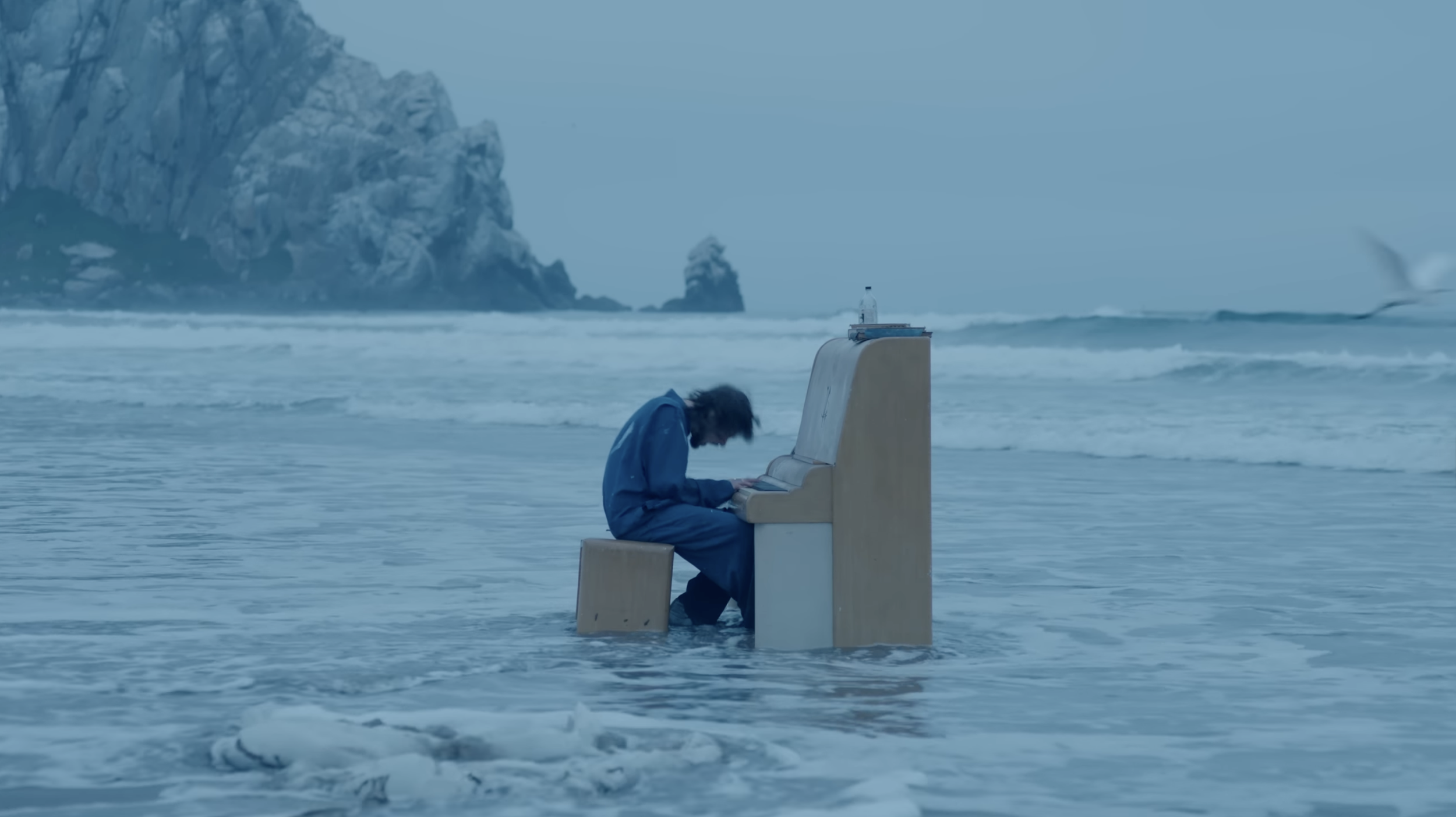
The fourth studio album by Quadeca is "Vanisher, Horizon Scraper". On July 25, 2025, Quadeca's first release since his departure from DeadAir Records was made available on his own label, X8 Music. Quadeca truly embraces the cinematic storytelling he started on “I Didn't Mean to Haunt You” in “Vanisher and Horizon Scraper.” The record follows a lone sailor who becomes obsessed with the horizon as storms, hallucinations, and loneliness gradually erode his sanity. The expedition serves more as a metaphor for obsessive and artistic ambition, pursuing something constantly visible yet ultimately unreachable, than as a nautical story on the surface. This album is perhaps his most complete and ambitious to date, garnering Quadeca even more critical acclaim and glimpses of mainstream appeal.
The coolest trait about Lasky is that he is fully independent; everything you see and hear is purely his, from the lyrics to the production to the direction of his music videos, he is the mastermind behind it all.
Quadeca's career reflects the development of the internet in many ways. Some of the most ambitious independent music being produced online now began as gaming content and diss tracks during the volatile YouTube period. Few performers have been able to fully reinvent themselves while retaining the core fan base that initially found them through online feuds and gaming videos. Quadeca has demonstrated that he is much more than a byproduct of YouTube culture, whether it is through the poignant narrative of “I Didn't Mean to Haunt You”, the unvarnished introspection of “Scrapyard”, or the cinematic aspirations of “Vanisher, Horizon Scraper”. Benjamin Lasky has created something much more uncommon: a career built on constant reinvention, where the horizon he’s chasing always seems just a little further away.
